Best Sticker Materials for Product Packaging
TLDR
- Laminated plastic film labels are the best general choice for most jars, bottles, bags, and retail packages.
- Paper labels work well for dry, indoor packaging when moisture resistance is not important.
- Clear film creates a printed-on-container look but needs careful color and surface preparation.
- Vinyl stickers are better for reusable packaging, outdoor exposure, giveaways, and applications that need extra durability.
- Specialty materials such as holographic vinyl work best as accents or limited-edition packaging.
- The label material, finish, adhesive, and container all need to work together.
A label can look perfect on a design screen and still fail on the product. It may wrinkle around a bottle, darken when oil touches it, lift in a refrigerator, or disappear against the color of the container.
That is why choosing the best sticker materials for product packaging starts with the environment, not just appearance.
A dry cardboard box has very different needs from a refrigerated sauce bottle. A candle jar may need oil resistance around the rim. A flexible pouch bends every time it is handled. And a reusable metal tin may need a thicker sticker that remains attractive long after the original product is gone.
The best material is the one that stays readable, adheres properly, and supports the way customers actually use the package.
Sticker Material, Finish, and Adhesive Are Different Choices
People often use “sticker material” to describe the entire product, but a printed label has several layers and characteristics.
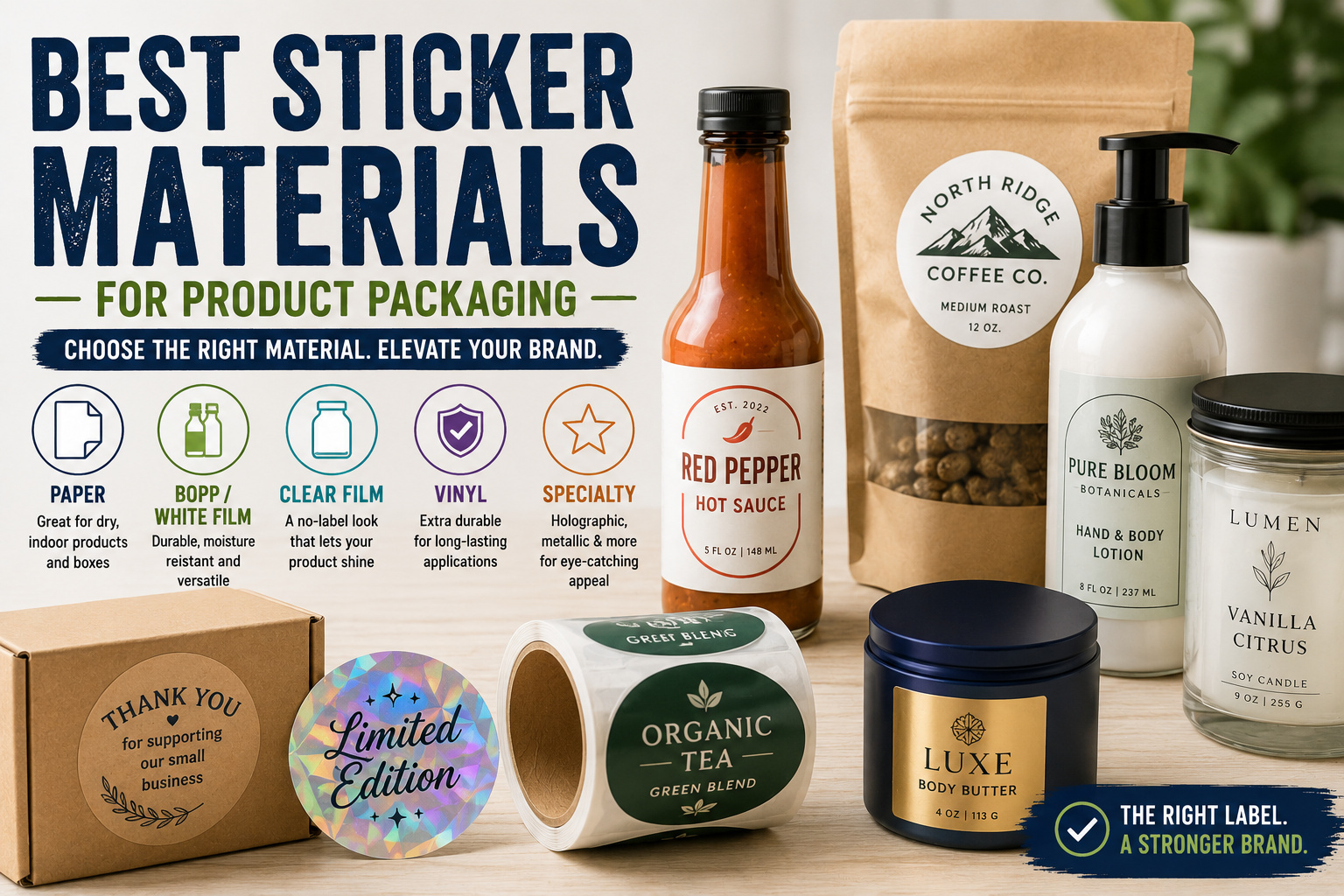
The face material is the visible surface. Common options include paper, white plastic film, clear plastic film, vinyl, and specialty materials.
The finish affects appearance and surface protection. Matte and gloss are finishes, not separate base materials.
The adhesive determines how the label bonds to glass, plastic, metal, paperboard, or flexible packaging.
The laminate or coating adds protection from scratching, moisture, oil, sunlight, and handling.
These parts need to work as a system. A waterproof face material will not help much if the adhesive releases from a wet or heavily textured container. A strong adhesive cannot prevent an unprotected paper surface from absorbing moisture.
CustomStickers.com offers roll and sheet labels in several sizes, shapes, materials, and finishes for product packaging. Businesses comparing formats can start with the main collection of custom packaging label options.
Quick Material Comparison
| Material | Best For | Main Strength | Main Limitation |
|---|---|---|---|
| Paper | Dry boxes, bags, envelopes, short-term indoor packaging | Natural feel and economical production | Vulnerable to moisture, oil, and tearing |
| White plastic film or BOPP | Bottles, jars, cosmetics, food packaging, general retail products | Durable, flexible, and moisture resistant | Costs more than basic paper |
| Clear plastic film | Glass, clear bottles, jars, transparent containers | Lets the package and product show through | Transparent areas can reduce contrast |
| Vinyl | Reusable containers, outdoor products, rugged packaging, giveaways | Greater thickness and long-term durability | Often more than standard packaging needs |
| Holographic or foil material | Limited editions, seals, promotional packaging | Strong visual effect | Can overpower detailed artwork |
| Static-cling film | Temporary windows or reusable promotional applications | Removes without permanent adhesive | Not suitable for most product packaging |
There are exceptions within every category. Always review the exact product specifications and test the label on the real container.
White Plastic Film or BOPP: Best for Most Product Packaging
For most product packaging, laminated plastic film is the safest general recommendation.
BOPP stands for biaxially oriented polypropylene. It is a thin film commonly used for pressure-sensitive product labels. BOPP can resist moisture, oil, tearing, and frequent handling better than ordinary paper, making it useful for food, beverage, cosmetic, wellness, and household packaging.
White film provides an opaque background beneath the artwork. That helps colors remain predictable when the label is applied to:
- Amber bottles
- Colored jars
- Kraft bags
- Dark boxes
- Filled clear containers
- Packaging with patterns or visible contents
White plastic labels are a strong choice for:
- Sauces and condiments
- Beverage bottles
- Skincare products
- Lotion and oil containers
- Soap packaging
- Candle jars
- Coffee bags
- Supplement containers
- Cleaning products
- Refrigerated jars
CustomStickers.com describes its current product-label offering as laminated, waterproof BOPP with protection against water, oil, and scratches. Matte and gloss finish options are available for packaging applications.
When White Film Is the Right Choice
Choose white plastic film when you need dependable color, moderate flexibility, and protection from normal packaging conditions.
It is especially useful when the product may be handled with damp or oily hands. It also works well on bottles and jars because the material is thinner and more label-like than a heavy promotional sticker.
For a large quantity of repeated applications, rolls are easier to store, dispense, and apply than individual stickers. Businesses with a logo or artwork that needs its own outline can use custom-shaped labels on rolls, which are available in paper, white plastic, and transparent plastic formats.
Paper Labels: Best for Dry, Indoor Packaging
Paper remains useful. It is simply not the right choice for every environment.
Paper labels work well on:
- Cardboard boxes
- Paper bags
- Envelopes
- Bakery boxes
- Dry-goods packaging
- Gift packaging
- Short seasonal runs
- Indoor retail products
- Tissue paper
- Product inserts
The material can create a soft, natural, handmade, or traditional appearance. It may also be more economical when the product does not need water or oil resistance.
Paper is less suitable for containers that will be refrigerated, exposed to condensation, stored in bathrooms, handled with oil, or washed. Moisture can cause paper to swell, wrinkle, tear, or lose print clarity.
When Paper Makes Sense
Use paper when all three of these statements are true:
- The packaging will remain dry.
- The product is mainly used indoors.
- The label does not need to survive for an extended period.
A paper seal on a bakery box may work perfectly because the customer opens the box the same day. The same material would be a poor choice for a bottle stored in an ice-filled cooler.
Do not choose plastic automatically when paper already meets the product’s needs. Extra durability is useful only when the package will benefit from it.
And do not assume that every paper label makes the finished package recyclable. Coatings, laminates, adhesives, inks, and the container itself can affect local recycling requirements.
Clear Plastic Film: Best for a No-Label Look
Clear labels let the container, product, or packaging color remain visible around the artwork.
They are a strong choice for:
- Glass jars
- Clear beverage bottles
- Cosmetic containers
- Candle vessels
- Transparent food packaging
- Minimalist branding
- Products with attractive colors or textures
The effect can make the artwork look as though it was printed directly on the package. CustomStickers.com offers transparent roll labels for product packaging with a gloss laminate finish and recommends them when the container should show through.
Clear film works best when the container surface is smooth and the design has enough contrast.
White Ink Matters on Clear Labels
Printing ink is not completely opaque by default. Without white ink behind selected areas, colors may become darker, lighter, or less visible after the label is applied.
For example:
- Yellow artwork may disappear on a light-colored drink.
- Blue artwork may turn muddy on an amber bottle.
- Black text may remain readable but colored illustrations may change.
- White areas in the file may become transparent unless white ink is specifically printed.
Use a white ink layer when you need certain colors to remain solid. Leave other areas transparent when you want the material effect to show.
Clear Labels Reveal Application Mistakes
Dust, fingerprints, air bubbles, and oil are more noticeable beneath transparent material.
Before application:
- Clean the package.
- Remove grease and dust.
- Let the surface dry fully.
- Avoid touching the adhesive.
- Apply from one edge toward the other.
- Use steady pressure to reduce trapped air.
A clear label will not hide a scratched bottle or uneven container seam. Test the finished appearance on a filled product, not only on an empty sample.
Vinyl: Best for Reusable and High-Durability Applications
Vinyl is thicker and more durable than a typical packaging film. It is a strong choice when the sticker needs to remain useful beyond the product’s first sale.
Consider vinyl for:
- Reusable tins
- Tool cases
- Outdoor products
- Refillable containers
- Coolers
- Durable storage boxes
- Promotional stickers included inside packaging
- Equipment labels
- Containers exposed to sunlight or abrasion
CustomStickers.com uses premium vinyl with a protective UV-resistant laminate for its standard stickers and distinguishes vinyl stickers from thinner film labels intended mainly for indoor packaging.
This distinction matters.
A product label identifies the item and usually remains with the original package. A promotional vinyl sticker is often meant to leave the package and end up on a laptop, bottle, toolbox, or vehicle.
The two can work together. A coffee bag might use a film label on the front and include one durable branded sticker for customers inside the order.
When Vinyl Is More Than You Need
Vinyl may be unnecessary for a paper bakery bag, indoor candle box, or disposable shipping carton. In those cases, the extra thickness and durability may not improve the customer experience.
Use vinyl when longevity is part of the purpose, not simply because it sounds stronger.
Holographic and Foil Materials: Best for Accents
Specialty materials can make packaging more noticeable, but they work best with restraint.
Holographic stickers reflect shifting rainbow colors under light. CustomStickers.com prints them on holographic vinyl and adds a protective laminate for greater durability.
They are useful for:
- Limited-edition products
- Launch seals
- Collectible packaging
- Artist merchandise
- Event products
- Holiday packaging
- Security-style visual accents
- Premium product tiers
The material is already visually active. Keep the artwork simple enough for the effect to remain clear.
Strong holographic packaging designs often use:
- Bold logos
- Simple linework
- Large text
- Solid white ink areas
- Controlled transparent sections
- Small seals rather than full-package coverage
A holographic label is not automatically more professional than a standard white or clear label. It should fit the product and audience.
A clean skincare company may benefit more from clear film. A trading card accessory brand, artist drop, or limited festival product may be a natural fit for holographic material.
Matte vs Gloss: Choose the Finish After the Material
Matte and gloss change how the label looks and feels, but they do not replace the need to choose the correct base material.
Choose Matte When You Want:
- Reduced glare
- A soft appearance
- A restrained or natural presentation
- Easy readability under bright retail lighting
- A finish that supports subtle colors
- A more understated package
CustomStickers.com describes its matte label rolls as using a glare-free laminate for a professional appearance.
Choose Gloss When You Want:
- Brighter-looking color
- More contrast
- A smooth, reflective surface
- A polished beverage or cosmetic appearance
- Greater emphasis on photos and saturated artwork
Gloss often suits colorful food labels, drinks, cosmetics, and energetic branding. Matte often suits candles, coffee, handmade products, wellness goods, and minimal packaging.
Neither is universally better.
Also consider where the label will be photographed. Gloss can produce glare under direct lights, while matte may photograph more predictably.
Match the Material to the Product
Food and Beverage Packaging
Use laminated film when the label may encounter condensation, refrigeration, oil, or frequent handling.
Paper may still work for dry bakery boxes, tea cartons, coffee bags, and products kept away from moisture.
A packaging label on the outside of a jar is not the same as a material approved for direct food contact. If any part of the label or adhesive may touch food directly, verify the applicable requirements before ordering. CustomStickers.com makes the same distinction between indirect and direct food contact in its product-label guidance.
Cosmetics and Skincare
Choose white or clear plastic film for products used around sinks, showers, oils, and lotions.
Test the label against the actual formula. Oil resistance, moisture resistance, and chemical resistance are separate concerns. A label that handles water may still react poorly to essential oils, alcohol, or cleaning ingredients.
Candles
Paper can work on clean, dry candle boxes. Plastic film is safer for jar labels that may be handled repeatedly or exposed to fragrance oil around the rim.
Make sure the label remains within the container’s straight section and away from areas that become excessively warm.
Coffee, Tea, and Dry Goods
Paper and film can both work.
Choose paper for a tactile, natural presentation on a dry bag. Choose film when the package may encounter oils, heavy handling, or a longer retail life.
Shipping Boxes and Mailers
Paper labels work for dry indoor shipping applications. Laminated film or vinyl makes more sense when the package may be exposed to rain, abrasion, or repeated handling.
For more ideas on using labels beyond the product container, see these practical packaging sticker examples.
Flexible Pouches and Squeeze Bottles
Use a thin, conformable film rather than a stiff paper label.
The container changes shape during filling and use. A rigid label may wrinkle, crease, or lift as the package flexes. BOPP and similar films are commonly used because they can handle moisture and conform more readily than paper.
Adhesion Depends on the Container
The same sticker may perform differently on glass, cardboard, metal, and plastic.
Before ordering, identify:
- The container material
- Whether the surface is smooth or textured
- Whether it is flat, curved, or tapered
- Whether it will be cold during application
- Whether it contains oil, dust, or mold-release residue
- Whether the package flexes
- Whether the label needs to be permanent or removable
Glass is generally smooth, but fingerprints and condensation can interfere with application.
Cardboard may be coated, uncoated, textured, dusty, or highly absorbent.
Plastic containers can vary widely. Some plastics are easier to bond to than others, and molded containers may contain surface residue from manufacturing.
Metal can be smooth and dependable, but curved seams and cold storage can still create problems.
Test the exact label on the exact package. Do not substitute a similar jar or empty sample when the real container will be chilled, filled, squeezed, or exposed to oil.
Apply Labels Under Realistic Conditions
Even the best sticker material can fail when applied poorly.
For reliable application:
- Clean and dry the container.
- Apply labels at a stable indoor temperature unless the product is designed for cold application.
- Fill and close flexible packages before deciding on final label placement.
- Keep the label away from bottle shoulders, curved bases, seams, folds, and gussets.
- Press the full surface firmly.
- Allow the adhesive time to build its bond before refrigeration or heavy handling.
- Test several finished products before labeling the full batch.
High humidity and moisture can weaken some adhesive bonds and cause curling or lifting when the selected materials are not designed for that environment.
A Simple Material Decision Guide
Choose paper when the package stays dry, remains indoors, and needs a natural or economical label.
Choose white plastic film or laminated BOPP when the product may face moisture, oil, refrigeration, or frequent handling.
Choose clear plastic film when the container or product should remain visible and the design can maintain enough contrast.
Choose vinyl when the sticker needs to survive outdoor use, abrasion, repeated handling, or life beyond the original package.
Choose holographic or foil material when the visual effect supports a limited release, promotion, collectible product, or bold brand identity.
Choose matte finish when you want less glare and a restrained presentation.
Choose gloss finish when you want greater shine, contrast, and color intensity.
And order a physical test whenever the packaging surface, environment, or product formula creates uncertainty.
Common Material Mistakes
Choosing Paper for a Refrigerated Bottle
Condensation can wrinkle the surface, blur the print, or cause edges to lift.
Using Clear Film Without Testing Contrast
Artwork that looks bright on a white screen may disappear against the product.
Paying for Vinyl on Disposable Packaging
A durable outdoor sticker may add cost without adding useful value to a package that will be discarded immediately.
Confusing Matte With Paper
Matte describes the surface finish. Plastic film and vinyl can also have matte laminates.
Ignoring Oil Exposure
Products containing lotions, sauces, essential oils, or cooking oils need more than basic water resistance.
Applying Labels Across a Container Curve
A good material cannot compensate for a label extending into a bottle shoulder, tapered wall, or rounded base.
Assuming “Waterproof” Covers Every Condition
Water exposure, dishwasher use, submersion, refrigeration, heat, oil, chemicals, and sunlight are different tests. Match claims to the actual product specifications.
Ordering a Large Quantity Before Testing
A small test batch can reveal color, adhesion, fit, and handling problems before they affect the full inventory.
Choose for the Real Product, Not the Mockup
The best sticker materials for product packaging are the ones that still work after the product leaves the design desk.
Paper is useful for dry boxes and bags. White film gives most products a reliable, durable label. Clear film creates a clean, transparent effect. Vinyl adds greater longevity. Specialty materials help limited products attract attention.
But material alone does not decide the result.
The label also needs the right adhesive, finish, size, shape, and placement. Test it on the filled package. Put it in the refrigerator. Handle it with damp hands. Place it under store lighting. Pack it in a shipping box.
A label that survives those ordinary tests will do more for the brand than the most attractive material chosen without them.