Earthquake Preparedness at Home: Secure Furniture and Plan Safe Areas
A useful earthquake plan starts with two jobs: prevent heavy objects from falling on people, and decide where everyone will take cover when shaking begins. Supplies matter, but a well-stocked kit cannot stop an unsecured bookcase, television or mirror from becoming an immediate hazard.
Walk through the home room by room. Secure tall and heavy items, move breakables down, identify cover locations, learn the utility controls and distribute basic supplies where damage will not make them unreachable. The goal is not to predict when an earthquake will happen. It is to remove avoidable hazards before you have only seconds to react.
Start with the objects most likely to fall or slide
Prioritize bookcases, dressers, refrigerators, televisions, hanging fixtures, mirrors, framed pictures and cabinets containing heavy or breakable objects. The U.S. Geological Survey’s home earthquake guidance recommends measures such as fasteners, braces and cabinet latches, along with moving heavy or fragile goods to lower shelves.
Work first in bedrooms, living rooms and other places where people spend substantial time. A heavy picture above a rarely used hallway table is a problem, but a similar object above a bed or sofa deserves faster attention.
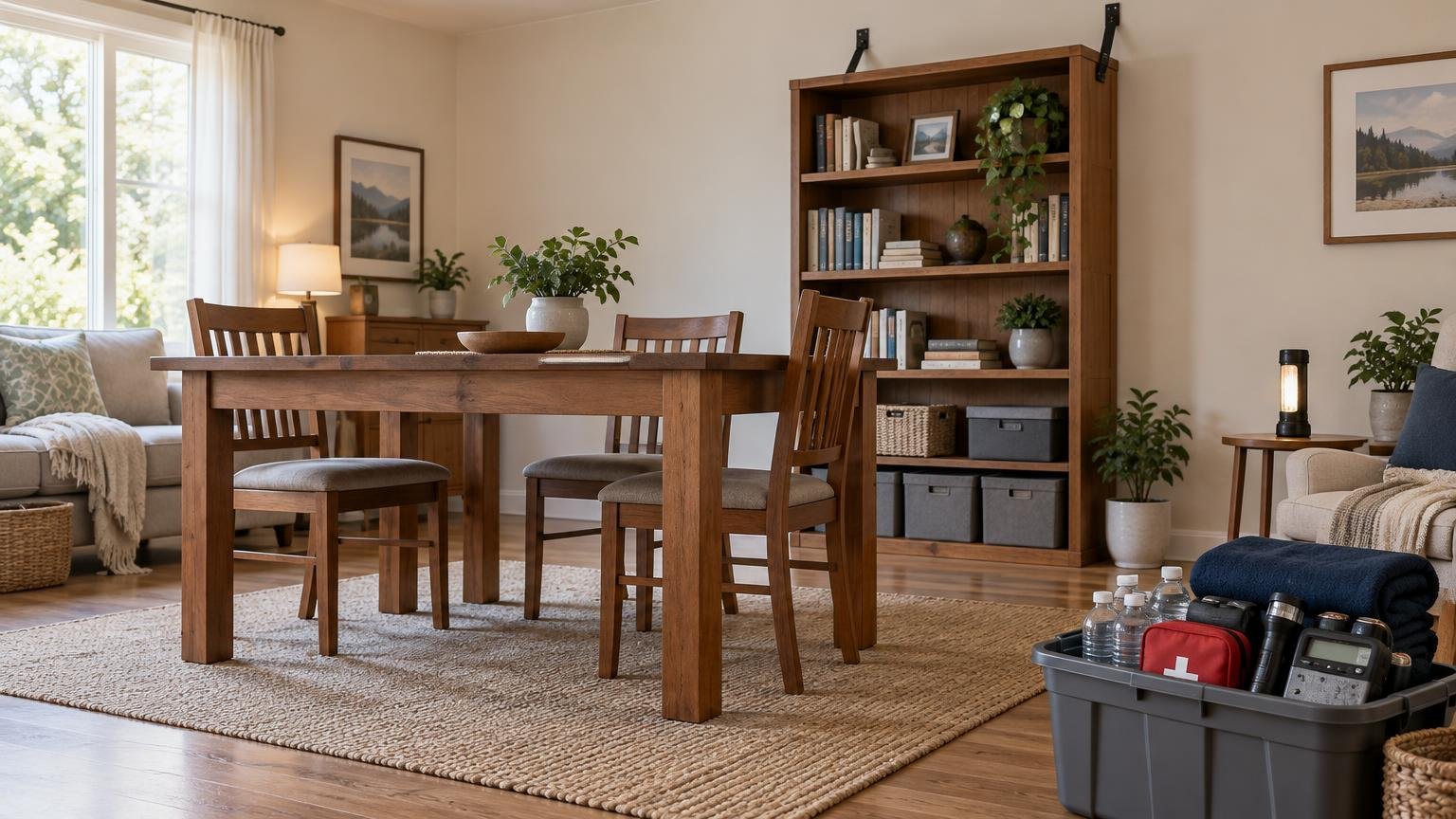
- Anchor tall bookcases, shelving units and dressers to wall studs using hardware appropriate for the furniture and wall construction.
- Restrain televisions and other heavy electronics so they cannot slide or topple.
- Secure refrigerators and gas appliances where applicable.
- Install suitable latches on cabinets holding glassware, dishes or heavy supplies.
- Move heavy and breakable objects from high shelves to lower storage.
- Secure mirrors, pictures and hanging fixtures, especially those positioned over beds, sofas or chairs.
- Keep exits and hallways clear of furniture that could fall across the route.
Do not confuse securing household contents with making the building itself earthquake-resistant. Anchoring furniture reduces indoor hazards, while foundation, cripple-wall, chimney and other structural concerns may require an evaluation and professional retrofit advice. USGS and FEMA materials recommend qualified structural expertise when assessing a home’s seismic safety.
Give the water heater special attention
A water heater can shift during strong shaking, damaging water or gas connections. Official earthquake guidance calls for properly strapping the unit to wall studs, while gas appliances should also be secured. Follow local code and manufacturer requirements, and use a qualified professional if you are uncertain about the installation.
While checking the utility area, make sure access to valves, panels and extinguishers is not blocked by stored boxes. Label controls clearly enough that another responsible household member can identify them under stress.
Choose safer areas before shaking starts
If sturdy cover is not nearby, get low beside an interior wall and protect your head and neck. Do not cross a room filled with moving or falling objects merely to reach a preferred table. Kitchens, areas beside tall furniture and spaces near windows or fireplaces are poor choices.
A doorway is not the default safe place in a modern home. USGS notes that modern doorways generally are no stronger than other parts of the building, and a swinging door can cause injury. Teach everyone to use nearby cover instead of relying on the familiar doorway myth.
Make bedrooms safer at night
Move beds away from windows and unsecured objects that could fall. Keep sturdy shoes, a flashlight, glasses, a whistle and a dust mask within reach of the bed. Broken glass and debris may make walking hazardous after the shaking stops, especially in darkness.
Children and adults should practice the same simple action in the places where they sleep, work and relax. A short household drill reveals practical problems, such as a table with no space underneath or a designated cover area crowded by storage.
Learn utility controls without creating another hazard
Every capable adult should know where the gas, water and electrical controls are and how local authorities or utilities instruct residents to operate them. Keep the correct shutoff tool accessible if one is required.
Knowing the procedure does not mean shutting off every utility automatically. In particular, USGS advises turning off the main gas valve when a leak is suspected—for example, after broken pipes, a gas odor or a hissing sound. Once gas has been turned off, a utility professional should restore service.
Until a gas leak has been ruled out, avoid matches, lighters, candles, camp stoves, barbecues, electrical switches and appliances that could produce a flame or spark. Camp stoves and barbecues belong outdoors, not inside the home or garage. Keep an ABC fire extinguisher accessible and make sure household members who may use it understand its operating instructions.
Prepare for darkness, outages and temperature changes
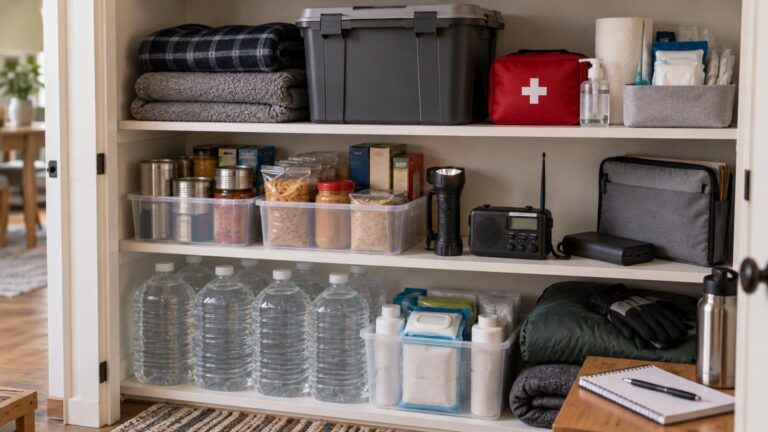
Place flashlights in several accessible locations rather than storing the only light in a garage or high cabinet. Add spare batteries, a battery-powered radio and backup charging for phones. Account for essential powered equipment, including CPAP machines, mobility devices and refrigerated medical supplies, with a realistic backup plan.
Test smoke and carbon monoxide alarms on their recommended schedule, replace expired units or batteries as required, and avoid blocking them with stored supplies. Use battery lighting instead of open flames after an earthquake.
Prepare for loss of heating or cooling as well as loss of electricity. Store a sleeping bag or warm blanket for each person, sturdy footwear, weather-appropriate clothing and at least one complete change of clothes. Colder households may need additional bedding and layers.
Build water, food and sanitation reserves
The CDC’s emergency water guidance recommends storing at least one gallon per person per day for three days and identifies commercially bottled water as the safest and most reliable emergency source. That water must cover more than drinking; cooking, toothbrushing and other household uses also consume the reserve. Families who want more resilience can build beyond that baseline as storage space and local guidance allow.
If you are deciding how to store a larger supply, compare container capacity, filled weight and dispensing method in our guide to emergency water storage containers. Keep some water in more than one accessible location so a damaged room does not cut off the entire reserve.
If officials say tap water is unsafe—or you have reason to suspect contamination—do not use it for drinking, preparing food, washing dishes, washing hands, brushing teeth, making ice or mixing infant formula. Use bottled, boiled or properly treated water according to local health-department instructions.
Stock shelf-stable foods your household already eats, including options for allergies, infants and pets. Favor foods requiring little water, cooking or cleanup. A manual can opener, disposable utensils and a safe outdoor cooking plan can prevent an outage from turning stored food into unusable inventory.
Sanitation supplies should include soap or hand sanitizer, toilet paper, feminine products, trash bags, paper products, diapers where needed and basic cleaning materials. Water-system damage can affect hygiene and waste management as well as drinking water, so store supplies for both problems. A broader 72-hour emergency kit checklist can help fill gaps beyond earthquake-specific preparation.
Organize medications, documents and communication
Include prescription medications, glasses, hearing-aid supplies, mobility aids, infant necessities and pet supplies. The Red Cross recommends keeping a one-month medication supply when feasible, although refill rules and medication storage requirements can affect what is practical.
Place copies of identification, insurance policies, bank information, medication names and dosages, emergency contacts, maps and extra keys in a portable waterproof container or secure backup. Include some practical access to money because an extended outage can disrupt electronic payments.
Create a household communication plan with an out-of-state contact and predetermined meeting locations. Everyone should know whom to contact and where to go if family members are separated and local calls are difficult. Keep a printed copy with emergency supplies rather than relying only on phones.
Store supplies where you can reach them
An emergency supply closet is useful, but it should not become a single point of failure. A jammed door, fallen shelf or blocked garage can make centralized supplies inaccessible. Keep bedside essentials near beds, flashlights in several rooms and a portable kit near an exit. Use a central home emergency supply closet for the larger reserve while distributing immediate-response items around the house.
A practical arrangement includes a portable Go-Kit and a larger home reserve. Red Cross guidance describes at least three days of supplies for evacuation and at least two weeks for staying at home. Tailor both to the people, pets, medical needs and hazards in your household.
Finish with a room-by-room earthquake check
- Stand in each room and identify the nearest sturdy cover or safer interior-wall location.
- Look above beds, seats and work areas for anything heavy, sharp or breakable.
- Anchor tall furniture and restrain televisions, appliances and hanging objects.
- Move heavy goods to lower shelves and latch vulnerable cabinets.
- Check water-heater restraints and keep utility controls accessible.
- Place sturdy shoes and a flashlight beside each bed.
- Distribute lights, basic first aid and communication supplies around the home.
- Store water, food, sanitation items, medications and pet supplies in accessible locations.
- Protect essential documents and print the household contact plan.
- Practice Drop, Cover, and Hold On with everyone in the household.
After an earthquake, expect aftershocks and put on sturdy shoes before moving through debris. Check for injuries and obvious hazards without entering severely damaged areas. If you are in a tsunami-risk coastal area and experience strong or long shaking, move inland or to higher ground after the shaking stops rather than waiting for an official alert.
The best first project is usually the room where people sleep. Secure the furniture, clear the area above the bed, place shoes and a flashlight within reach, and identify cover. Then repeat the same process through the rest of the home. That sequence turns earthquake preparedness from an intimidating shopping exercise into a manageable hazard-reduction plan.
References
- What can I expect in my house when an earthquake occurs, and what can be done to prevent problems? | U.S. Geological Survey
- Earthquake Facts & Earthquake Fantasy | U.S. Geological Survey
- CERT Hazard Annexes
- Be Prepared for Any
- What do I do AFTER an earthquake? | U.S. Geological Survey
- What should I NOT do during an earthquake? | U.S. Geological Survey
- Be Red Cross Ready
- www.earthquakecountry.org
- Earthquake Safety | Earthquake Preparedness | Red Cross
- www.fema.gov
- ReadyAdditional Items to Consider Adding to an Emergency Supply KitPrescription medications and glassesPrepare. Plan. Stay Informed. ®Infant formula and diapersPet food, water and supplies for your petImportant family documents such as copies of insurance policies,
- How to Create an Emergency Water Supply | Water, Sanitation, and Hygiene (WASH)-related Emergencies and Outbreaks | CDC
- How to Make Water Safe in an Emergency | Water, Sanitation, and Hygiene (WASH)-related Emergencies and Outbreaks | CDC