
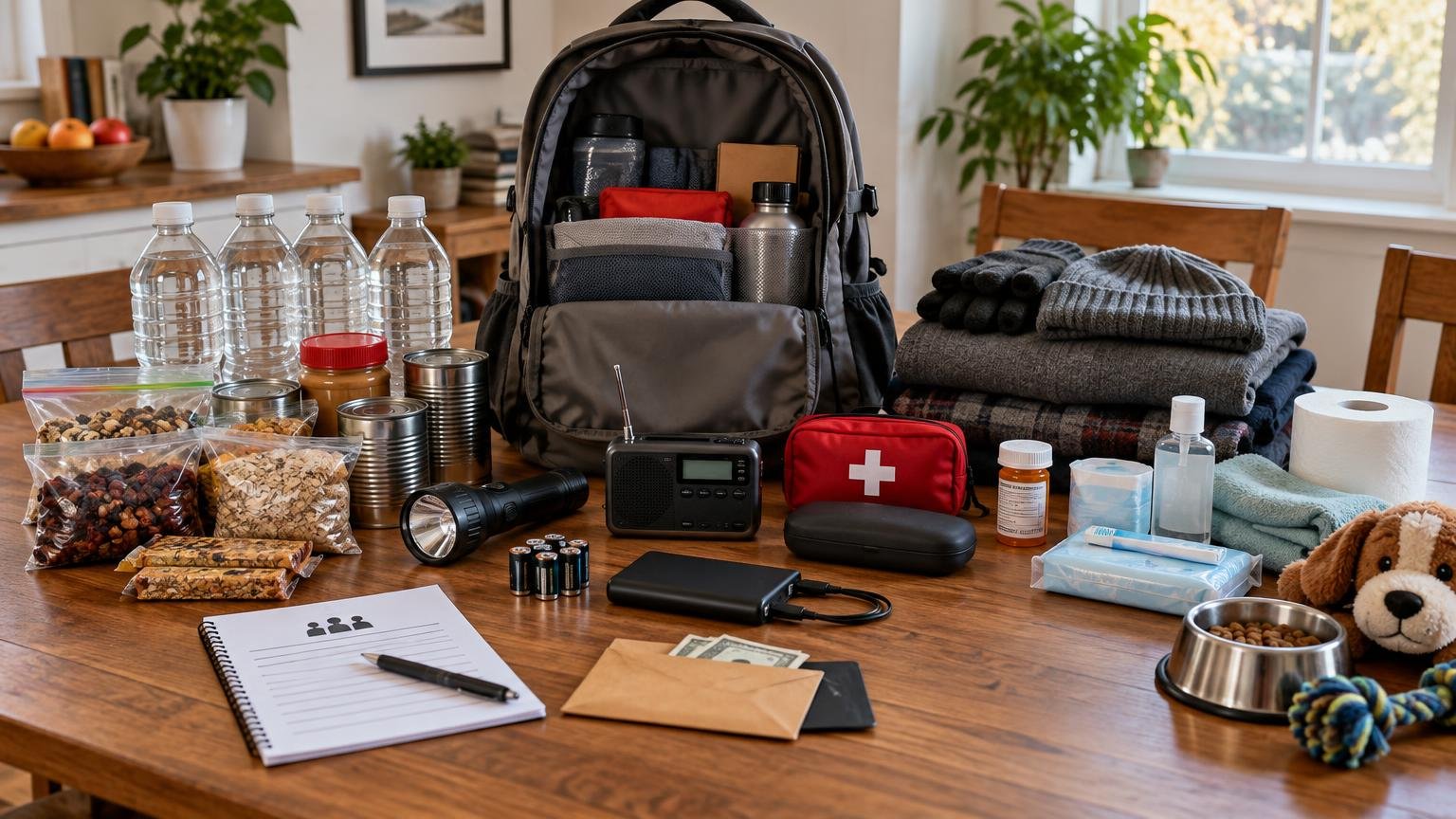
What to Put in a 72-Hour Emergency Kit: A Practical Household Checklist
TLDR: A useful 72 hour emergency kit checklist starts with water, ready-to-eat food, essential medications, first aid, lighting, communication equipment, hygiene supplies, clothing, cash, and copies of critical documents. Store at least one gallon of water per person per day for three days, then add supplies for pets, children, disabilities, medical equipment, and dietary restrictions. Keep bulky supplies at home and a smaller, portable go-kit ready for evacuation.
A 72-hour kit is a household emergency supply baseline, not a wilderness-survival pack or a guarantee that outside help will arrive within three days. It should support your household during an outage, storm, evacuation, or other disruption when stores, utilities, transportation, and communication may be limited.
Start with supplies that address immediate health and safety. Once those are covered, improve comfort and resilience with extra clothing, sanitation items, backup charging, tools, and copies of household records. If you are starting from scratch, you can use this checklist alongside our guide to building a family emergency kit from ordinary supplies.
Quick-start essentials
- Water for every person, plus additional water required by pets or medical needs
- Nonperishable food that household members can safely eat
- Prescription medications and essential medical supplies
- First-aid kit
- Flashlights or headlamps with compatible spare batteries
- Battery-powered or hand-crank radio
- Phone-charging equipment and backup power
- Printed contact information and local maps
- Copies of important documents and cash in small denominations
- Weather-appropriate clothing, sturdy shoes, and blankets
- Hygiene and sanitation supplies
- Infant, pet, disability, dietary, and caregiver-specific supplies
How much water and food do you need?
The baseline in Ready.gov’s basic emergency supply checklist is one gallon of water per person per day for drinking and sanitation, with at least a three-day supply. That means one person needs at least three gallons, while a household of four needs at least 12 gallons for three days. This is a people-based minimum; pets, certain health conditions, hot weather, and other circumstances can increase the amount required.
Water is heavy, so divide it according to how the kit will be used. Keep the full household quantity in an accessible home location, but place a practical carryable amount in each evacuation bag. Your evacuation plan should identify where you could obtain additional safe water rather than assuming one person can carry the entire household supply.
Choose at least three days of nonperishable food. Favor familiar items that can be eaten without cooking, extensive preparation, or large amounts of water. Ready.gov also includes a manual can opener in its basic kit guidance.
- Canned meat, fish, beans, fruit, or vegetables with a manual can opener
- Nut or seed butter if appropriate for the household
- Crackers, tortillas, cereal, or other shelf-stable staples
- Shelf-stable milk or an appropriate alternative
- Ready-to-eat meals that do not require heating
- Food for allergies, medical diets, infants, and other individual needs
- Disposable utensils and a small supply of paper towels
- Pet food packed separately from human food
Avoid building the entire food plan around salty foods or meals that require boiling water. Pack foods your household already tolerates, and check that everyone can open the packaging. Households managing allergies or other restrictions can use a more detailed emergency food plan for special diets.
72-hour emergency kit checklist
Lighting, power, and communication
- Flashlight or headlamp for each adult or responsible older child
- Spare batteries in the correct sizes
- Battery-powered or hand-crank radio
- Phone cables and wall and vehicle adapters
- Charged power bank assigned to priority phones or medical devices
- Whistle for signaling
- Printed household contact list
- Local road map and marked meeting locations
A phone is valuable, but it should not be the only way to receive information. NOAA Weather Radio carries National Weather Service forecasts, watches, warnings, and other hazard information. Alert-capable receivers can sound notifications for urgent events, although reception and alert coverage vary by location. Check your local transmitter coverage before depending on a radio.
Power banks also need a maintenance routine. Assign available charging capacity to communication and health needs before entertainment, and include cables that actually fit the devices in the kit. A written emergency phone-charging plan can prevent several household members from draining the same backup battery early in an outage.
First aid, medications, and medical devices
- A stocked first-aid kit and instructions
- Prescription medications stored as permitted by their labels and your care plan
- Nonprescription medicines your household routinely uses
- Copies of prescriptions and a current medication list
- Glasses, contact-lens supplies, hearing-aid batteries, and other daily aids
- Medical-device chargers, backup batteries, adapters, or manual alternatives
- Cooling equipment and a power plan for temperature-sensitive medication
- Written medical, allergy, and emergency-care information
- Face coverings, disposable gloves, and hand sanitizer
Personalize this section rather than treating a general checklist as complete. CDC guidance calls attention to medications, medical supplies, assistive technology, specialty foods, infant supplies, and pet needs. Disability-focused guidance also recommends planning for communication aids, mobility supports, accessible storage, charging, backup power, and refrigerated medications where applicable.
Documents and cash
- Photo identification copies
- Insurance policy and contact information
- Medical information and medication lists
- Property, vehicle, lease, or mortgage records relevant to recovery
- Emergency contacts, including an out-of-area contact
- Pet identification and veterinary information
- Copies of household emergency and evacuation plans
- Cash in small denominations
- A waterproof document pouch
CDC preparedness guidance identifies identity documents, insurance information, medical records, property records, emergency contacts, and cash as useful emergency paperwork and financial resources. Keep portable copies in the kit, but do not put every original document in a bag that could be lost or stolen. Secure originals appropriately and protect digital copies with suitable access controls.
Clothing, warmth, hygiene, and sanitation
- Change of clothes for each person
- Season-appropriate layers, rain protection, and warm hats where needed
- Sturdy, closed-toe shoes
- Work gloves
- Blankets or compact emergency blankets
- Toilet paper, moist wipes, soap, and hand sanitizer
- Toothbrushes and toothpaste
- Menstrual products and continence supplies
- Diapers, wipes, and diaper-disposal bags
- Trash bags with ties
- Personal hygiene products and spare masks
Pack clothing by season and evacuation conditions, not just by the calendar date when you assembled the kit. The American Red Cross includes sanitation supplies, extra clothing, sturdy shoes, blankets, documents, and cash in its emergency-kit guidance.
Tools and practical household items
- Manual can opener
- Multipurpose tool or basic hand tools
- Wrench or pliers for utility shutoff, if appropriate for your home and local guidance
- Duct tape and plastic sheeting for general temporary repairs
- Fire extinguisher appropriate for the home
- Waterproof matches or a lighter, stored safely
- Paper, pencil, and permanent marker
- Spare house and vehicle keys
- Local maps
- Copies of relevant utility shutoff instructions
Ready.gov includes a whistle, local maps, sanitation items, a manual can opener, and a wrench or pliers for turning off utilities in its basic guidance. Learn the correct procedure before an emergency; do not operate a utility valve merely because a tool is available. Follow directions from the utility or local emergency officials.
Keep a home supply cache and a portable go-kit
One bag rarely handles both sheltering at home and evacuating on foot. A home cache can hold the full water supply, additional food, blankets, sanitation materials, and larger backup-power equipment. A go-kit should prioritize what household members can realistically carry: medications, medical equipment, documents, communication tools, some water and food, clothing, and immediate hygiene supplies.
| Home supply cache | Portable go-kit |
|---|---|
| Full three-day water baseline and additional household water | A carryable water supply plus a plan to obtain more |
| Bulk food and sanitation supplies | Compact, ready-to-eat food |
| Larger lighting and backup-power equipment | Headlamp, radio, power bank, and cables |
| Extra bedding and clothing | One practical clothing change and weather layer |
| Household tools and repair materials | Only essential lightweight tools |
| Secure records and replacement supplies | Portable document copies, contacts, medications, and cash |
Place go-kits near an exit that remains accessible, but account for children, theft risk, temperature extremes, and medication-storage requirements. If household members spend substantial time at work, school, or in a vehicle, consider smaller location-specific kits rather than assuming everyone will be home.
Add supplies your household cannot safely do without
Babies and children
Add diapers, wipes, formula or safe feeding supplies, bottles, familiar foods, medications, comfort items, and copies of caregiver contacts. Include age-appropriate identification and make sure another responsible adult understands feeding, medication, and care routines. CDC provides a dedicated emergency checklist for pregnant people, infants, and children.
Pets and service animals
Pack food, water, bowls, medication, a leash or harness, waste bags, a carrier where appropriate, vaccination information, identification, and a recent photo. Add bedding or another familiar item if space permits. Determine in advance which evacuation locations accept pets and what documentation a service animal may need.
Disability, access, and caregiver needs
Include mobility-device accessories, communication boards, written instructions, backup batteries, charging equipment, hearing-aid supplies, sensory items, and accessible packaging. Store essential items where the person who needs them can reach and identify them. If evacuation requires physical assistance, assign people and backup people before an emergency.
Dietary restrictions and chronic health needs
Pack foods that are safe for each person, including any preparation tools needed to use them. Account for glucose monitoring, ostomy supplies, respiratory equipment, injectable medication, refrigeration, and waste disposal where relevant. CDC emphasizes adapting emergency supplies to personal health needs rather than relying solely on a standard kit.
Prescription medication may require more than three days
Medication planning does not fit one universal quantity. CDC disability-preparedness guidance says to consider keeping at least a one-week supply of prescription medicine, while its checklist for pregnant people, infants, and children recommends at least two weeks of prescriptions. Supply limits, insurance rules, controlled-substance regulations, expiration dates, and storage requirements may affect what is possible.
Ask a pharmacist or clinician how to maintain continuity safely. Discuss refills, prescription copies, dosing information, refrigeration, transport, backup power, and what to do if a dose is delayed. Never change dosing or transfer medicine to an unsuitable container simply to fit it into a bag.
Make communication part of the kit
Equipment helps only when the household has a plan for using it. Print phone numbers because a damaged or dead phone may make stored contacts inaccessible. Choose an out-of-area contact who can receive status updates when local lines are congested, and designate one nearby meeting place plus another outside the neighborhood.
- Write down each household member’s phone number, workplace or school, medical contacts, and evacuation assistance needs.
- Choose primary and backup meeting locations.
- Assign one out-of-area contact and give that person the household plan.
- Mark evacuation routes, shelters, hospitals, and important addresses on a paper map.
- Place a copy in each go-kit and give one to every household member who can carry it.
- Practice sending a short status message and explain when household members should call, text, or conserve battery power.
Store and maintain the kit
Use clearly labeled, water-resistant containers and divide supplies into modules such as food, first aid, documents, lighting, and sanitation. This makes it easier to find one item without unloading everything. Put frequently needed medical and communication equipment where it can be reached first.
Review the kit every six months. CDC’s checklist for pregnant people, infants, and children specifically recommends checking expiration dates and equipment functionality on that schedule. Also inspect the kit after using supplies and whenever medications, household members, addresses, pets, dietary needs, or seasonal hazards change.
- Replace expired food, medicine, and first-aid supplies appropriately
- Inspect water containers for leaks or damage
- Test flashlights, radios, alarms, cables, and power banks
- Recharge batteries and replace damaged charging cables
- Update clothing sizes and seasonal layers
- Update contacts, insurance information, prescriptions, and identification copies
- Confirm that every household member knows where the kits are
- Reassess whether each portable bag is still manageable for its intended carrier
Build the kit in stages if money is limited
Do not delay the entire project while trying to buy every optional item. Start with supplies that protect health and communication, using suitable household items you already own when practical.
- Store the three-day water baseline and familiar nonperishable food.
- Organize essential medications, medical supplies, and first aid.
- Add flashlights, a radio, batteries, charging cables, and a power bank.
- Print contacts, plans, and document copies; add small-denomination cash as your budget allows.
- Pack clothing, blankets, hygiene supplies, and sanitation materials.
- Add household-specific and location-specific items.
- Upgrade containers, organization, and backup equipment after the essentials are covered.
The best next step is simple: calculate your household’s minimum water requirement, gather the medications and medical equipment nobody can safely go without, and place those needs at the top of a written checklist. Then build the home cache and portable go-kits around the people who will actually use them.
References
- Ready
Prepare. Plan. Stay Informed.AdAdditional It - NOAA Weather Radio (NWR)
- Building an Emergency Kit | Emergency Preparedness and Disability Inclusion | CDC
- Personal Needs | Prepare Your Health | CDC
- Paperwork | Prepare Your Health | CDC
- What Do You Need In a Survival Kit | American Red Cross
- Emergency Kit Checklist: Pregnant Women, Infants, and Children | Children & School Preparedness | CDC
