How to Rotate Food, Water, and Batteries Stored in a Vehicle
Rotate car emergency supplies on three schedules: conduct a complete review every six months, make a seasonal update before extreme heat or winter weather, and perform a quick check before a long or remote trip. Do not assign every item the same arbitrary replacement date. Water, food, disposable batteries, rechargeable power banks, medications, and seasonal equipment age differently.
Ready.gov recommends checking emergency-kit needs every six months and adjusting the contents as household needs change. Its suggested supplies include water, nonperishable food, flashlights, spare batteries, a radio, maps, and backup phone power. Ready.gov’s preparedness guide provides a useful foundation for the twice-yearly review.
Use one master schedule, then rotate by condition
| When | What to do | What triggers replacement |
|---|---|---|
| Every six months | Empty the kit, inspect every package, test equipment and update passenger information | Damage, leakage, depletion, outdated dates or changed household needs |
| Before extreme heat or winter | Adjust water, clothing, blankets, shade, traction and recovery supplies | A new season or travel into a different climate |
| Before a long or remote trip | Check quantities, phone charging, lighting, medicines and route-specific equipment | Trip distance, passengers, road conditions or limited services |
| After using the kit | Replace consumed water, food, batteries and first aid supplies | Any item has been opened, used or given away |
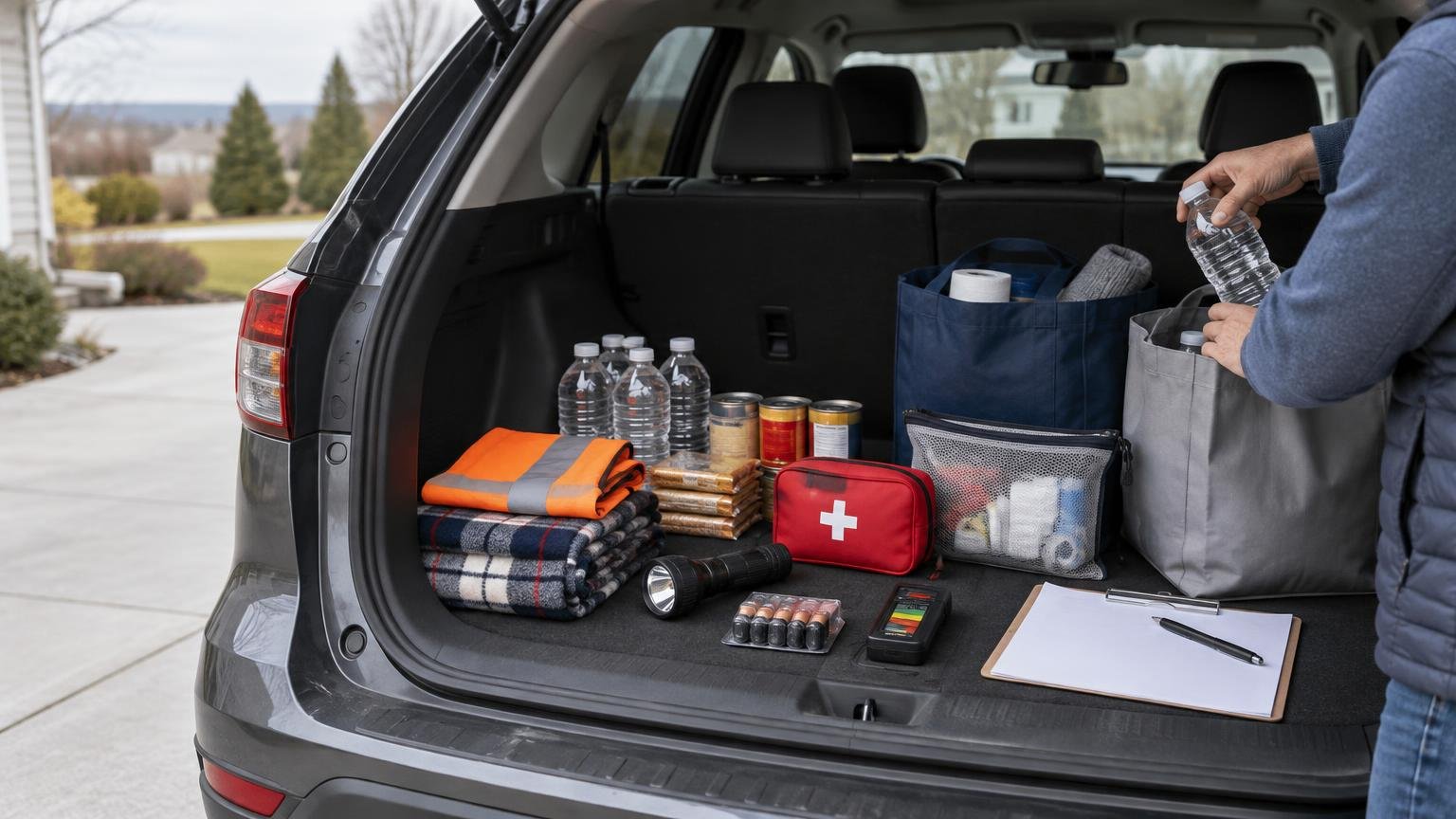
Write the next review date on an inventory card inside the kit. Record quantities and package dates rather than relying on memory. Keep this inventory separate from a vehicle emergency information card containing contacts, medical details and roadside numbers.
Rotate vehicle water conservatively
Water is heavy and vehicle storage space is limited, but it remains a priority. The American Red Cross suggests at least one gallon per person for 24 hours in a car kit. That differs from the broader household and evacuation benchmark of one gallon per person per day for at least three days. Use the car-kit amount as a starting point, then increase it for more passengers, pets, remote routes, strenuous activity or hot conditions. The Red Cross vehicle-kit guidance also covers food, lighting, visibility and tire supplies.
For commercially bottled water, record the printed date and follow the manufacturer’s storage and replacement directions. At every review, look for leaks, damaged seals, cloudiness or distorted containers. Replace questionable containers rather than depending on them during a breakdown.
If you fill emergency-water containers yourself, FEMA CERT material recommends storing them in a cool, dark place away from direct sunlight and replacing the water every six months. A parked vehicle is not a cool, stable storage environment, so use the six-month point as a firm review and replacement trigger for self-stored water.
Do not let the water permanently stored in the car become the household’s entire evacuation supply. Maintain a larger reserve at home and move additional water into the vehicle when a storm, evacuation, remote trip or extreme-temperature drive makes it appropriate.
Rotate food by date, condition and heat exposure
Choose nonperishable food that needs no cooking or refrigeration and that the passengers will actually eat. Appropriate options depend on allergies, dietary restrictions and medical needs; a household managing those issues can use a dedicated emergency food plan for special diets to select safe items.
There is no reliable universal rotation interval for every food stored in every vehicle. Review each item using three tests: its package date, the condition of its container, and how much heat or temperature fluctuation it has experienced. Vehicle temperatures can reduce the useful quality and storage life of foods, including packaged field meals.
Move intact food into normal household use before its date or condition becomes questionable, then replace it with a fresh item. This first-in, first-out system reduces waste and keeps familiar food in the kit.
- Discard cans that are leaking, bulging, badly dented, cracked, loose-lidded or foul-smelling. USDA recommends keeping canned goods in a cool, dry place rather than exposing them to temperature extremes. USDA canned-food guidance explains the relevant warning signs.
- Replace pouches with broken seals, punctures, swelling or unusual odors. Inspect vehicle-stored field meals for signs of heat damage.
- Keep refrigerated and other perishable foods out of a standing vehicle kit unless safe temperature control is continuously maintained. USDA says perishable food generally should not remain between 40°F and 140°F for more than two hours, or one hour when the air temperature exceeds 90°F.
- Include a manual can opener when any selected food requires one.
Test batteries instead of trusting a fixed interval
Battery chemistry, device power draw, manufacturer dates and vehicle temperature all affect replacement timing. The available guidance does not support one universal rotation interval for every battery. Test the flashlight, radio and other powered equipment during each six-month review and before weather seasons when those devices may become critical. Replace depleted, leaking, corroded, swollen, damaged or manufacturer-expired batteries.
Store spare disposable batteries in their original packaging or a battery case, with terminals protected from keys, tools and other metal objects that could cause a short circuit. Battery manufacturer guidance also advises cool, dry storage and warns that heat can contribute to capacity loss, leakage or rupture.
Treat rechargeable phone power banks as maintained equipment rather than permanent cargo. Follow their manufacturer’s instructions for operating temperature, storage charge and recharging frequency. During each review, inspect the case and cable, recharge the unit as directed, and confirm that it actually powers the phone you carry. Remove a swollen or damaged unit from service.
Make the rotation match the vehicle’s real job
A commuter driving through a populated area has different needs from a family crossing a remote winter route. Build the permanent core around communication, visibility, first aid, water, food, warmth or shade, and common tire or battery trouble. The broader road trip emergency kit checklist can help identify equipment beyond consumable supplies.
Then adjust the kit for climate, trip distance and passengers. Winter guidance includes blankets or sleeping bags, dry clothing, a shovel, traction material, a scraper, tools and booster cables. CDC also cautions that a disabled vehicle may not provide sufficient heat; in low visibility or on icy roads, staying with the vehicle is often safer than walking away.
For hot-weather travel, prioritize additional water, nonperishable snacks, shade and dependable communication. NHTSA’s roadside emergency equipment guidance includes a phone and charger, flashlight, warning devices, jumper cables, tire equipment, water, food, medicines, maps and protective clothing or blankets.
Account for every regular passenger. Update medications, infant supplies, medical-device batteries, children’s items, special foods, and pet food, water and handling equipment whenever needs change.
Finish every review with a five-minute readiness check
- Remove everything and clean the storage container.
- Check water seals, food packaging and all printed dates.
- Test flashlights, radios, charging cables and power banks.
- Replace used, damaged, depleted or questionable items.
- Update supplies for passengers, pets, climate and planned travel.
- Confirm that warning devices, tire tools and battery equipment remain accessible.
- Write the new review date on the inventory card and calendar.
A well-rotated vehicle kit is not necessarily the largest kit. It is one whose contents match the people, route and season—and whose water, food, lighting and communication supplies still work when roadside waiting turns into an emergency.
References
- Are You Ready?An In-Depth Guide to Citizen Preparedness
- Prepare for Cold Weather
- Safety Guidelines: During & After a Winter Storm | Winter Weather | CDC
- an
CERT Basic Training
Instructor Guide - Food, MRE
SZ Fire Cache
- Battery Care – Dos Don'ts – Energizer OEM
- Additional Items to Consider Adding to an Emergency Supply Kit:
- Emergency Car Kit: 10 Essential Items | Red Cross
- Ready
Prepare. Plan. Stay Informed.AdAdditional It - How long can you keep canned goods?
- What is the Danger Zone?
- Winter Infographics
- Summer Driving & Road Trip Tips | NHTSA