
TLDR
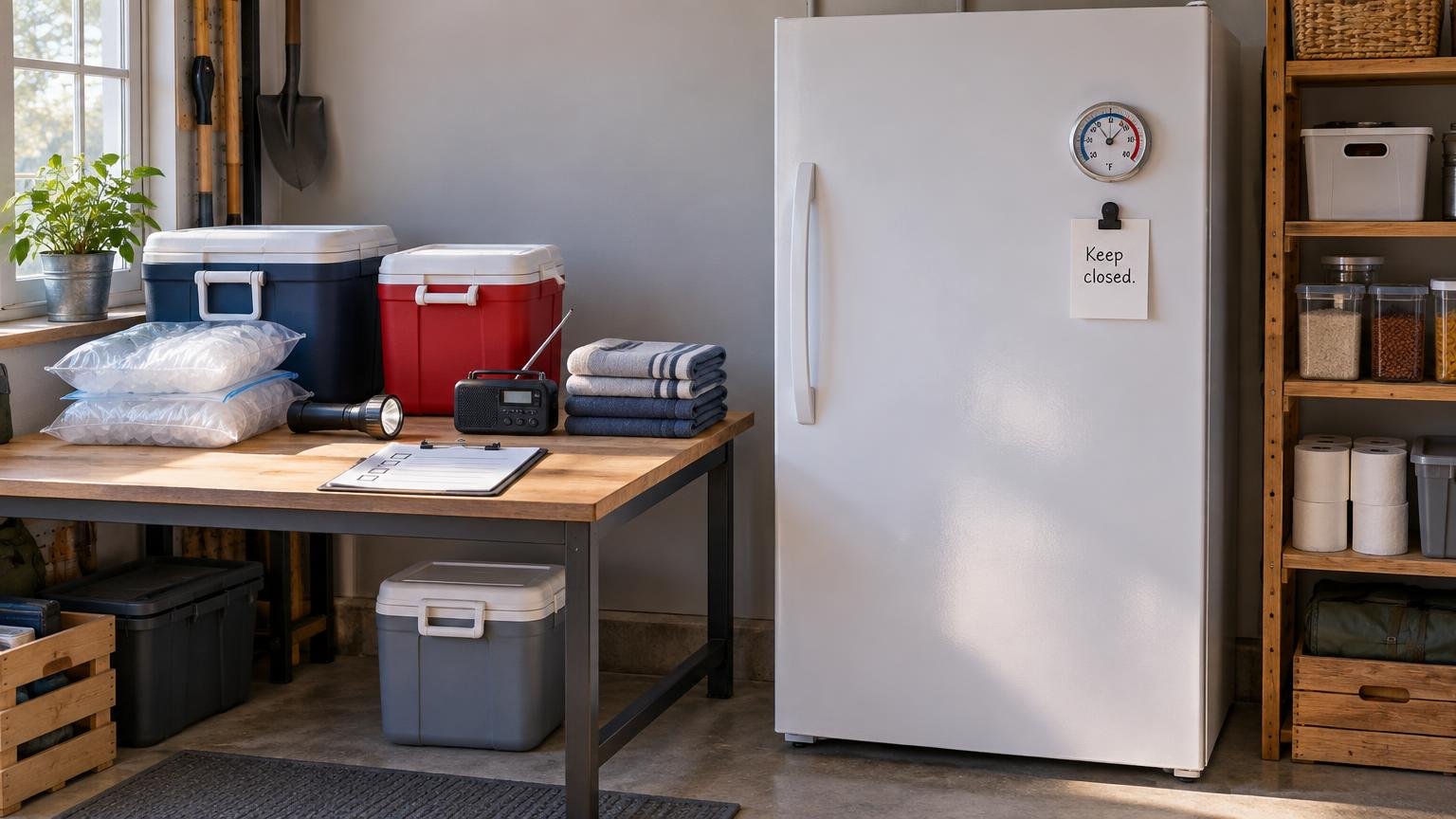
To prepare freezer for power outage conditions, set it to 0°F (-18°C) or below, place an appliance thermometer inside, group frozen food together, and freeze water containers or gel packs ahead of time. Once power fails, note the time and keep the door closed. A full unopened freezer may hold a safe temperature for about 48 hours, while a half-full freezer may hold it for about 24 hours, but these are planning estimates rather than guarantees. After power returns, check the temperature and food condition before the appliance has time to cool everything again. Food that still contains ice crystals or measures 40°F or below can generally be refrozen or cooked. Never taste food to decide whether it is safe.
A freezer is already an insulated cold box, so the most effective outage plan is straightforward: start as cold as recommended, add thermal mass, and avoid releasing cold air. A planned utility shutoff gives you time to make ice and organize supplies. During an unexpected outage, your best first move is usually to leave the freezer alone while you determine how long the interruption may last.
How to prepare freezer for power outage conditions
Begin with temperature. USDA and CDC guidance recommends keeping a freezer at 0°F (-18°C) or below. Put an appliance thermometer where it can be read quickly when power returns. The freezer’s control dial tells you what the appliance is trying to do; a thermometer helps reveal the temperature actually reached.
Next, consolidate the contents. Frozen items grouped closely together help keep one another cold. If the freezer has unused space, freeze water containers and gel packs before a scheduled outage. This additional frozen mass is especially useful in a half-full freezer. Keep one or more coolers available if an interruption may last long enough to require moving selected food.
USDA also advises freezing refrigerated items that will not be needed immediately. This can extend their cold-storage time while adding more frozen material to the freezer. Use judgment: only move foods that freeze reasonably well, and do not crowd the freezer so tightly that it cannot freeze them before the planned shutoff begins.
- Confirm that the freezer is at 0°F or below.
- Place a working appliance thermometer inside.
- Group frozen packages together rather than spreading them across empty shelves.
- Freeze water containers and gel packs before a scheduled shutoff.
- Stage clean coolers where they can be reached without searching in the dark.
- Make a short inventory of expensive, perishable, or medically important contents.
- Check the utility’s notice or alert system for the expected start time and duration.
- Plan meals so nobody needs to open the freezer during the outage.
What changes during a planned outage?
Use advance notice to complete preparation early. Make ice, freeze suitable refrigerated food, charge phones, locate flashlights, and place the thermometer where it can be checked with one quick door opening later. Confirm whether the utility describes the shutoff as a fixed service window or an estimate that may change.
Move the food you expect to use during the outage into a properly prepared cooler with sufficient ice before power is cut. That prevents repeated freezer openings for snacks or dinner ingredients. If the outage is expected to continue beyond the freezer’s likely holding time, arrange access to block ice or another safe cold-storage location before local supplies become scarce.
What to do when power fails unexpectedly
Record the time as soon as you notice the outage. Then keep the freezer closed. Avoid opening it merely to check whether the food still feels frozen; every opening exchanges cold interior air for warmer room air.
Check official utility alerts and local emergency information using a charged phone or battery-powered radio. Preserve phone power for essential communication. A written emergency phone charging plan can help a household decide which devices receive limited charging capacity during a long outage.
The commonly cited holding times assume the freezer stays closed: approximately 48 hours when full and 24 hours when half-full. Appliance condition, starting temperature, room temperature, food load, and door openings can all shorten the practical window. Treat the estimates as planning boundaries, not a countdown guaranteeing that every package remains safe.
When to use coolers, block ice, or dry ice
Do not transfer food automatically when the power goes out. Opening the freezer and moving everything into a warmer cooler may work against you during a short interruption. Consider transferring priority items when the outage is likely to outlast the freezer’s cold-holding window and you have a colder, properly prepared destination.
Block ice can extend cooling in an appropriate cooler or freezer. FDA also identifies dry ice as a possible cold source for an extended outage and gives an illustrative example of 50 pounds for a fully stocked 18-cubic-foot freezer for two days. That figure is not a universal formula; freezer size, food load, conditions, and product instructions matter. Consult the official guidance before deciding whether dry ice is suitable for your situation.
Is a generator necessary?
A generator is not required for every freezer outage. A closed, cold freezer can often bridge a shorter interruption without being powered. A generator becomes a broader household decision when outages are prolonged, medically significant equipment requires electricity, or extreme temperatures create additional risks.
Generator safety is more important than saving food. Ready.gov advises operating generators outdoors and at least 20 feet from doors, windows, and vents. Camp stoves and charcoal grills also belong outdoors. Homes should have working smoke and carbon-monoxide alarms with battery backup. Never improvise indoor generator placement because of rain, theft concerns, or extension-cord convenience.
How to assess food after power returns
Check the appliance thermometer promptly, before the restored freezer has enough time to cool thawing food and obscure the conditions reached during the outage. Examine foods individually rather than making one decision for the entire freezer.
According to the CDC guidance for keeping food safe after an emergency, frozen food that still contains ice crystals or is at 40°F or below can generally be refrozen or cooked. Refreezing may reduce quality even when the food remains safe. If you cannot establish that a perishable food stayed within safe conditions, use an official food-specific discard chart rather than guessing.
Do not taste questionable food to test it. Smell and appearance are also not dependable proof that food is safe. When evidence about time and temperature is missing, discarding an uncertain perishable item is safer than trying a bite.
| What you find | Practical response |
|---|---|
| Food still has ice crystals | It can generally be refrozen or cooked. |
| Food measures 40°F or below | It can generally be refrozen or cooked, although quality may decline. |
| Temperature history is uncertain | Check an official food-specific discard chart; do not rely on smell or taste. |
| Food is clearly unsafe or fails official criteria | Discard it without tasting. |
Keep medical products separate from the food plan
Do not apply general freezer timelines to medication, vaccines, breast milk, or refrigerated medical devices. These products can have specific temperature ranges and handling requirements. Follow the product labeling and contact the manufacturer, pharmacist, health care provider, or other responsible authority for a product-specific outage plan. FDA specifically advises planning for medical devices that require refrigeration rather than relying on ordinary household food-storage rules.
If loss of refrigeration could create an immediate medical problem, include that risk in the household communication, transportation, and backup-power plans. Keep relevant telephone numbers and device information accessible on paper as well as on a phone.
Prepare the household around the freezer
Food is only one part of an outage. Accessible lighting reduces the temptation to search dark rooms with candles. Charged communications devices help you receive utility and emergency updates. Drinking water, sanitation supplies, temperature-appropriate clothing, necessary medications, and a safe place to relocate may matter more than the freezer during a prolonged interruption. Ready.gov includes supplies, communication, medical needs, safe-temperature shelter planning, and carbon-monoxide protection among broader outage priorities.
Build those items into a practical family emergency kit rather than storing freezer supplies in isolation. Households managing allergies or restricted diets should also maintain suitable shelf-stable alternatives through an emergency food plan for special diets, because safely replacing a discarded meal may otherwise be difficult.
Printable freezer outage checklist
Before a planned outage
- Set the freezer to 0°F or below and verify it with an appliance thermometer.
- Group frozen food together.
- Freeze water containers, gel packs, and suitable refrigerated foods not needed immediately.
- Prepare clean coolers and determine where block ice could be obtained if needed.
- Move near-term meals out of the freezer before the shutoff.
- Charge phones and backup batteries.
- Confirm utility alerts and note the expected outage window.
- Review plans for medical products that require controlled temperatures.
When power fails
- Write down the time.
- Keep the freezer door closed.
- Check utility and emergency alerts.
- Use flashlights or other battery-powered lighting.
- Preserve phone power for essential communication.
- Reassess the cold-storage plan if the interruption approaches the freezer’s estimated holding window.
- Operate generators, grills, and camp stoves only according to official outdoor safety guidance.
When power returns
- Check the freezer thermometer promptly.
- Look for ice crystals and measure questionable food when practical.
- Refreeze or cook qualifying food at 40°F or below.
- Use an official food-specific chart for uncertain items.
- Never taste food to determine whether it is safe.
- Discard food that does not meet the applicable safety criteria.
- Reset clocks, alarms, and outage-related household equipment.
The practical next step
Prepare the freezer before the next outage by completing three small tasks: add an appliance thermometer, freeze several cold packs or water containers, and put a one-page checklist near the appliance. During an outage, protect the cold air by keeping the door closed. Afterward, base food decisions on temperature, ice crystals, and official guidance—not optimism, smell, or taste.