How to Use Custom Stickers to Make Your Packaging Look More Professional
TLDR
- Custom stickers can make basic packaging look more polished without a full packaging redesign.
- The best results come from using the right sticker type for the job, not just the cheapest option.
- Logo stickers, product labels, thank-you seals, and QR code stickers can all improve presentation.
- Consistency matters more than complexity. A few well-used sticker elements go a long way.
- Small businesses can use stickers to look more established while keeping costs under control.
Plain packaging is not always a problem. But plain packaging with no branding usually is.
A box, mailer, pouch, or bag can be perfectly functional and still feel forgettable. That matters because packaging is often one of the first physical touchpoints a customer has with your business. It is not just there to protect the order. It also tells people something about your brand. Clean packaging feels organized. Thoughtful packaging feels trustworthy. And even a small branded detail can make the whole order feel more complete.
That is why custom stickers are one of the simplest tools small businesses can use. They give you a way to add personality, improve consistency, and make packaging look more professional without committing to expensive custom boxes or large print runs. If you want better-looking packaging without making the process harder, stickers are a very good place to start.
Why Stickers Work So Well for Packaging
Custom stickers solve a real business problem. Most small brands do not want to order thousands of custom boxes every time they adjust a logo, launch a new product, or test a seasonal look. That is expensive and hard to manage.
Stickers give you flexibility.
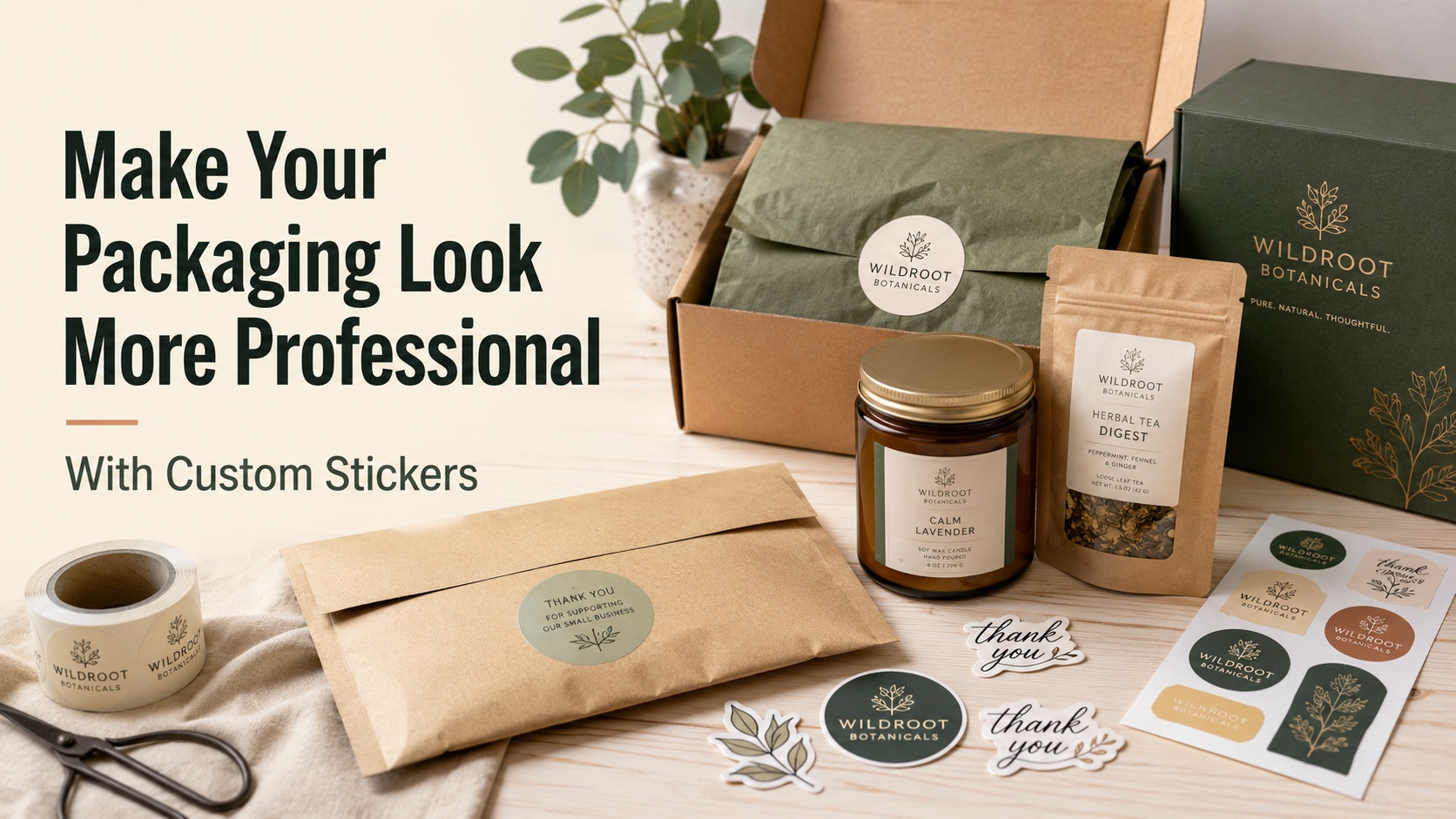
You can use the same plain boxes, kraft mailers, tissue paper, or pouches and still make them feel branded. A clean logo sticker, a product label, or a simple thank-you seal can make generic packaging look intentional. That matters whether you sell candles, soap, skincare, coffee, apparel, stationery, or handmade goods.
Stickers also help with consistency. If your website, social media, inserts, and packaging all use the same color palette, logo, and tone, the brand feels more cohesive. It does not need to be complicated. It just needs to feel like the same business showed up in every place.
Start With the Packaging You Already Use
Before ordering anything, look at your current packaging setup.
Ask yourself:
- What are you already shipping in?
- What feels unfinished?
- What part of the package gets seen first?
- What information do customers need right away?
- Where could a sticker save time or improve presentation?
For some businesses, the best place to start is the outside of the package. A simple logo sticker on a plain mailer can be enough. For others, the better move is inside the package, like a thank-you sticker, a product label, or a seal on tissue paper.
You do not need to brand every square inch. In fact, overdoing it can make packaging feel cluttered. The goal is to add just enough branding that the package feels clear and thoughtful.
Use Logo Stickers for a Clean First Impression
If you only start with one sticker type, logo stickers are usually the easiest choice.
They are flexible, easy to apply, and useful across many kinds of packaging. You can place them on mailers, boxes, tissue paper, jars, pouches, bags, envelopes, or inserts. They help a plain package feel like it belongs to a real brand, not just a random shipment.
This is especially useful if you are still testing your packaging system. Instead of committing to custom printed boxes, you can use custom vinyl stickers to apply your branding where it makes the most sense.
A good logo sticker usually has:
- A clear logo or icon
- Enough contrast to stand out
- A size that fits the packaging well
- A shape that works with your design
- A finish that matches your brand tone
Matte stickers often feel softer and more understated. Gloss stickers usually feel brighter and a bit more retail-ready. Neither is universally better. It depends on your brand and where the sticker will be used.
Pick the Right Sticker Type for the Job
Not every sticker belongs on every package. Choosing the right format helps a lot.
Here’s a simple breakdown:
| Sticker Type | Best Use |
|---|---|
| Die cut stickers | Logo stickers, promotional handouts, brand extras |
| Roll labels | Product packaging, jars, boxes, bottles, pouches |
| Sticker sheets | Multi-design sets, small labels, inserts, packaging kits |
| Clear stickers | Minimal branding, product containers, windows, sleek packaging |
| Holographic stickers | Special editions, giveaways, seasonal packaging |
If you are labeling many products quickly, roll labels for packaging usually make more sense than loose individual stickers. They are easier to apply and better for repeated use across larger batches.
If you want variety, sticker sheets are useful for smaller branding systems. They work well when you want several small elements on one sheet, like a logo, product names, social icons, or a few decorative designs.
The right sticker choice depends on how you pack orders, how many products you ship, and how much hand application time you want to spend.
Use Stickers to Add Key Information
Stickers do more than decorate packaging. They can also help communicate useful information.
This is one of the easiest ways to make packaging feel more professional. A customer should not need to guess what they bought, what scent they chose, or where to find more information.
Useful sticker applications include:
- Product names
- Flavor or scent labels
- Size labels
- Ingredient highlights
- Batch or seasonal markers
- Care instructions
- “Fragile” or handling notes
- QR codes
- Reorder reminders
Let’s say you sell candles in the same jar style year-round. A base label system plus a scent sticker can make your packaging easier to manage. Or if you sell baked goods at events, a clean roll label on each bag can show the product name and your business name at the same time.
That is good branding, but it is also good operations.
Make the Unboxing Experience Feel Intentional
People remember packaging when it feels thoughtful, not when it feels expensive for the sake of it.
A sticker can help create that feeling. A thank-you seal on tissue paper, a sticker closing an insert card, or a branded label on the outside of the box can make the whole package feel more finished.
This matters because packaging is part of customer experience. If the order arrives in a plain mailer with no context, it can feel generic. If it arrives with a clean branded sticker, matching insert, and a simple thank-you note, it feels more personal.
A few ideas that work well:
- Seal tissue paper with a round logo sticker
- Add a thank-you sticker inside the box
- Use a small branded sticker on sample bags
- Include a QR code sticker that links to reorders or social media
- Use a seasonal sticker for holiday or limited-run orders
You do not need all of those. Even one or two can make a real difference.
Keep the Design Simple
One of the biggest packaging mistakes is trying to put too much on a small sticker.
A sticker does not need to carry your entire marketing strategy. Most of the time, it works best when it does one job well. That job might be branding, labeling, sealing, or pointing someone to the next step.
Here are a few smart design rules:
- Use readable text
- Avoid cramming in too many details
- Keep colors consistent with your brand
- Make sure the logo is clear
- Use enough white space
- Match the sticker size to the packaging
- Test the design at actual size
The smaller the sticker, the more discipline you need. Tiny script fonts, low-contrast text, or overcrowded layouts can make packaging feel less professional, not more.
Simple almost always wins here.
Match the Sticker Finish to the Brand
Finish changes how a sticker feels.
This is a small detail, but it matters. A matte finish tends to feel softer and more understated. It works well for brands that want a clean, modern, handmade, or minimal look. A gloss finish feels brighter and more energetic. It often works well for colorful designs, retail packaging, or brands that want a bolder feel.
If your packaging already has texture, kraft material, or muted tones, matte may fit naturally. If your packaging is colorful, clean, or product-forward, gloss may help the artwork stand out.
Neither choice is wrong. The best option is the one that feels consistent with the rest of your brand.
Use Stickers to Test Packaging Ideas Before Scaling Up
This is one of the best reasons to use custom stickers.
Maybe you are not fully sure which logo version to use. Maybe you are testing a seasonal offer. Maybe you want to see if a new product line needs different packaging colors. Stickers let you test those ideas without redoing everything else.
You can try:
- A temporary seasonal logo
- A new color palette
- A limited-edition product label
- A holiday packaging accent
- A new QR code call to action
- A different size or shape
That is much cheaper than replacing every printed packaging component. It also makes it easier to improve your brand over time instead of locking yourself into a packaging setup too early.
Common Sticker Mistakes to Avoid
Stickers are helpful, but they still need a little strategy.
Here are some common mistakes:
Using the wrong size
A sticker that is too small disappears. One that is too large can overwhelm the package.
Choosing the wrong format
Loose die cut stickers are great for giveaways, but they are not always the most efficient choice for labeling products in bulk.
Over-designing the sticker
Too much text or too many design elements can make the branding harder to read.
Ignoring packaging materials
A sticker should work with the surface it is being applied to. Curved jars, flexible pouches, and cardboard boxes can all behave differently.
Applying stickers inconsistently
If some packages get one placement and others get another, the brand can feel messy. Try to make placement consistent.
Treating the sticker like an afterthought
The sticker is small, but it still represents the business. A rushed design can make the whole package feel less polished.
A Simple Sticker System for Small Businesses
If you want a practical place to start, here is a simple sticker system that works for many small brands:
| Packaging Need | Suggested Sticker |
|---|---|
| Outer package branding | Logo sticker |
| Product identification | Roll label or small product label |
| Interior presentation | Thank-you sticker or tissue seal |
| Promotions | QR code sticker or offer sticker |
| Giveaways | Die cut sticker |
| Product variety | Sticker sheet or flavor/scent marker |
This kind of system keeps things organized without making packaging too complicated. You can build it slowly. Start with one or two sticker types, then add more if the process needs it.
FAQs
What kind of stickers are best for packaging?
The best stickers for packaging depend on the job. Die cut stickers work well for logo branding and giveaways. Roll labels are often better for product packaging and repeated use. Sticker sheets are helpful when you want multiple small designs in one place.
Are custom stickers a good alternative to printed boxes?
Yes. Custom stickers are a smart alternative when you want branded packaging without committing to expensive custom boxes. They let you use plain packaging while still adding a polished brand element.
What should I put on a packaging sticker?
That depends on the purpose. A packaging sticker might include your logo, product name, scent or flavor, size, care instructions, QR code, or a short thank-you message. Keep it focused.
Should I use matte or gloss stickers for packaging?
Matte stickers often fit softer, minimal, or handmade brand styles. Gloss stickers tend to feel brighter and more vivid. Choose the one that matches your brand and packaging look best.
Can stickers help small businesses look more professional?
Yes. When used well, stickers make packaging feel more intentional and consistent. Even a simple logo sticker can improve presentation and help customers remember the brand.
How many different stickers does a small business need?
Most small businesses can start with one or two. A logo sticker and a product label are usually enough at the beginning. You can add thank-you stickers, QR code stickers, or giveaway stickers later if needed.
Conclusion
Custom stickers are one of the easiest ways to make packaging look more professional without spending a fortune. They help small businesses add branding, improve consistency, and test ideas without rebuilding their entire packaging system.
The best approach is usually the simplest one. Start with the packaging you already use, decide what feels unfinished, and add sticker elements that solve a real need. A logo sticker, product label, or thank-you seal can go a long way when it is well designed and used consistently.
You do not need packaging that feels flashy. You need packaging that feels clear, thoughtful, and put together. Stickers are a very practical way to get there.